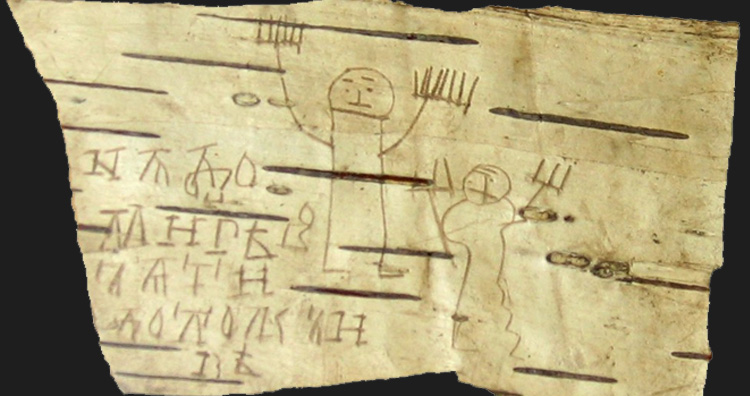

I know something for a fact: when you were young, you doodled on your paper. Some of you likely still do, whether to pass time in a boring class or to work out your thoughts on a complicated topic.
Onfim wanted nothing more than to be a knight, like his father before him.
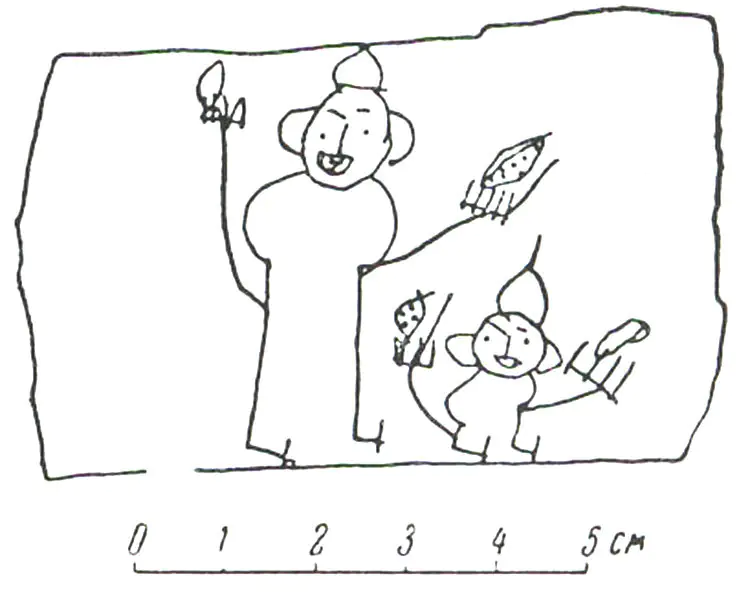
And sometimes his knight daydreams got in the way of the rest of his schoolwork. Here, he starts to write the first few letters of the Cyrillic alphabet, and promptly gets bored and draws a figure riding a horse. To clear up any confusion as to the identity of the rider, he clearly labels the person “Onfim.”
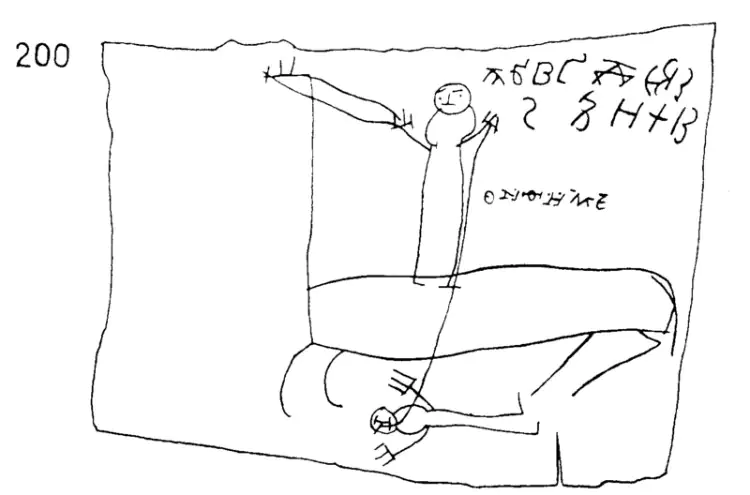
That was not the only time he would get bored.
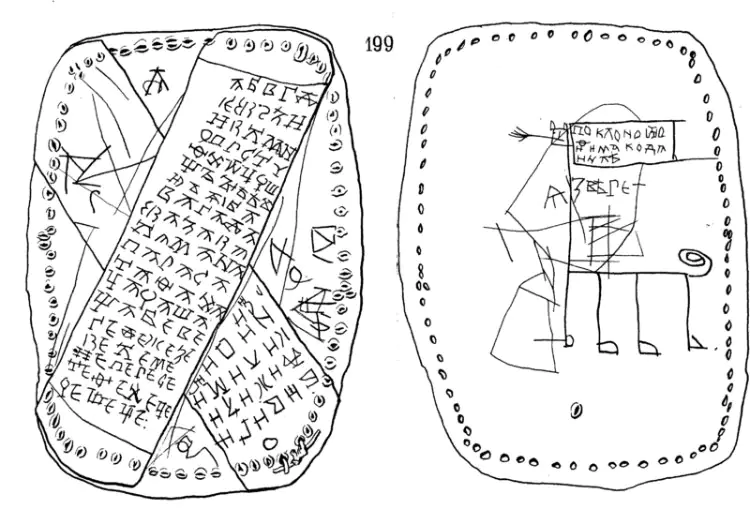
On one side of the birch bark, Onfim practices his alphabet. Then he flips it over and draws a long-necked, curly-tailed beast with pointed ears, with what appears to be flames spewing out of its mouth.
Text sprawled across the creature’s neck, reading: “I am a beast.” Despite its fearsome figure, it extends a greeting: above its head, a banner reads “Greetings from Onfim to Danilo,” a note to a friend or peer.
I love looking at these images—there are many more. Each and every one makes me smile. These birch remains are a humbling reminder of one’s own humanity. Humanity doesn’t change, not really. Deep down, there is a little bit of Onfim in all of us.