
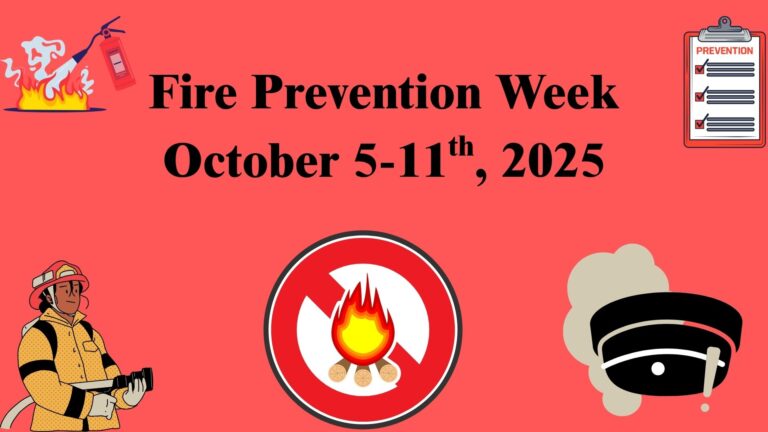

This week is Fire Prevention Week, and here’s what you need to know!
What is Fire Prevention Week?
Fire Prevention Week runs from October 5th to 11th, and helps educate community members on the importance of fire safety and prevention, especially when it comes to home fires. Since 1922, the National Fire Prevention Association (NFPA) has sponsored Fire Prevention Week, following the devastating “Great Chicago Fire” of 1871, which claimed the lives of 250 people and destroyed approximately 17,000 structures.
Fire Prevention Week gives fire departments across the nation the chance to educate their citizens on the importance of having working smoke detectors, carbon monoxide detectors, being aware of fire hazards, and how to call 911 to report a fire. Fire departments hosted open houses and pancake breakfasts as a way to get the community involved and educated on these important pieces of life-saving information.
This year, the NFPA is bringing awareness to lithium-ion battery fires, which have caused a lot of home fires this past year, and this week they are giving community members the opportunity to learn how to watch out and prevent these types of fires from happening. Lithium-ion battery fires are not only dangerous for people, but also to the firefighters stopping the fires, with risks such as severe burns from the chemicals inside the batteries.
Find out if you can participate in Fire Prevention Week by checking in with your local fire department/district, or go to nfpa.org/events/fire-prevention-week to learn more.
Here are some helpful fire prevention and awareness tips:
1. Close before you doze!
Close your door before you go to sleep at night, because this helps limit the spread of fire, in the event that your home catches fire.
2. Check your smoke detectors to see if the batteries or actual detectors need changing.
Smoke detectors are the most crucial device a home can have, as they alert people inside the house if there’s any smoke or fire activity. This helps people quickly evacuate and call for help; a non-working smoke detector is no good.
3. Call 911 if you see or smell a fire.
Calling 911 is the most important thing to do when a fire happens, as the dispatcher on the other end of the line can help you by sending the closest fire department or fire trucks to you for help. It is important to be calm and informative when reporting the fire, and be sure to include the address of your home and a good callback phone number.