
Also written by Marisol Gutierrez
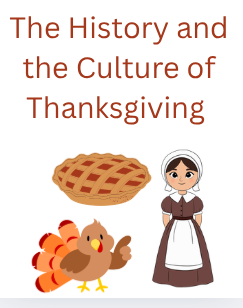
Thanksgiving is a famous and warm American fall holiday. You eat pie, hang out with family and friends, and watch some football. But how did this holiday come to be? Its history may have been lost as the central focus of the holiday, but the formation of Thanksgiving is rich and important in early American history, with its events still leaving an impact and being present today. Let’s dig in with how this turkey-themed tradition came to be!
Thanksgiving as a holiday existed even before the Pilgrim-Native feast of 1621. Many Native tribes held festivals for the harvest, dancing and practicing their culture. Even Europeans held Thanksgiving before the widely recognized feast of 1621 took place, and they held celebrations for safe arrivals and military victories, with the first account of this taking place in 1578! The Pilgrims were not the introducers of Thanksgiving to the world, even if the holiday wasn’t going by that name back then. But, in 1621, the Pilgrims threw a feast to celebrate a successful harvest after a year of starvation and hardship. This became the famous account of the Plymouth Pilgrims and the Wampanoag Native Americans dining together in what was colonial New England (and what was really settled Wampanoag land). The two groups drank and ate together, playing games and doing activities. This resulted in a partnership between the two: the Natives helped the Pilgrims by teaching them survival skills in a land that was unbeknownst and unfamiliar to the pilgrims, and the Pilgrims gave them advanced tools and goods. But this peace between the two groups was short-lived, and eventually a war erupted that stripped the Wampanoag people of their homes and land.
President George Washington tried to make the 26th of November the Thanksgiving holiday, but the first modern Thanksgiving occurred in 1863 while the Civil War was splitting people apart. President Abraham Lincoln wanted to promote being together and time as a family. So, he chose to make the fourth Thursday of that year and for the years to come Thanksgiving. Many other presidents have tried to change it to be different weeks and days, but the first iteration is what has stuck to this day. Lincoln intended for all Americans, even ones at sea or at war, to come together for a time of thanks and to appreciate loved ones. One fun fact about Lincoln and the Thanksgiving turkey was that he pardoned a turkey from getting cooked. He did this because his son had grown to love the turkey and felt bad about cooking it.
Now, this holiday is severely detached from what it was intended to be, and in modern times it’s meant as a fun holiday for family gatherings and gratitude. But, this holiday cannot be stripped from the hurt it caused Native Americans. Many indigenous people see it as a painful reminder of the hurt and suffrage their people faced and still are going through. Many Native people will travel to Plymouth Rock on a Day of Mourning to reflect on their history. Some Native Americans will use Thanksgiving to celebrate their own culture, both Native Americans are not monolithic people. Native American history is indelibly tied and fastened into Thanksgiving and American history as whole, and even now Native Americans are still deeply intertwined with America today and they still face issues of racism and poverty. It’s important not to downgrade their impact to just a headband with feathers; the eradication and force Native Americans went through is a large aspect of this holiday’s history.
The first Thanksgiving day football game occurred in 1934 between the Detroit Lions and the Chicago Bears. The radio broadcast was a big hit, so the other teams tagged on, and now you can almost guarantee that somebody will be watching the annual football game at their house before and after dinner. The famous turkey became a staple after the first holiday was announced, and to celebrate, Chef Sarah Josepha Gould wrote a newspaper article about turkey recipes that people implicated and will still use for many years, to come. Macy’s Thanksgiving Day Parade started in 1924, with Macy’s workers marching. The iconic balloons started with one Felix the Cat balloon, and the performers we see now were animals from the zoo walking along 34th street with everyone else. Now, 3.5 million people see the parade in person, and 50 million watch from home.
In modern days, people like to eat, come together, watch the Macy’s Thanksgiving Day Parade, and celebrate being thankful for what they have. The holiday of Thanksgiving has evolved throughout the years, but hopefully this helps to know how Turkey Day came to be what it is. Happy Thanksgiving!