
As a young girl, my grandparents bought me a year pass to the Denver Nature and Science Museum. It became one of my favorite places, and we went almost religiously. I stared through the panes of glass, trying to imagine a time where flesh, sinew and feathers once covered the fossils before me. Trying to picture the wings of an ancient butterfly stretch and flutter out of the pins that held it captive. I walked through the hallways of exhibits, hearing the silent roar from a taxidermied saber tooth tiger. I could hardly fathom that I walked the same Earth that these animals once walked upon. And yet, although I averted my gaze from the particularly terrifying creatures, there is a sort of sadness to it all. Never again will any of these strange, beautiful animals hunt and breed and live.
In the museum, it is easy to feel distant from it all, to feel the billions of years drawn out between you and the specimen in front of you. Society has treated extinction as a distant thought, something that only happened to the dinosaurs and never again. But in reality, there were 5 main extinction events.
And humans are causing the 6th mass extinction, right now.
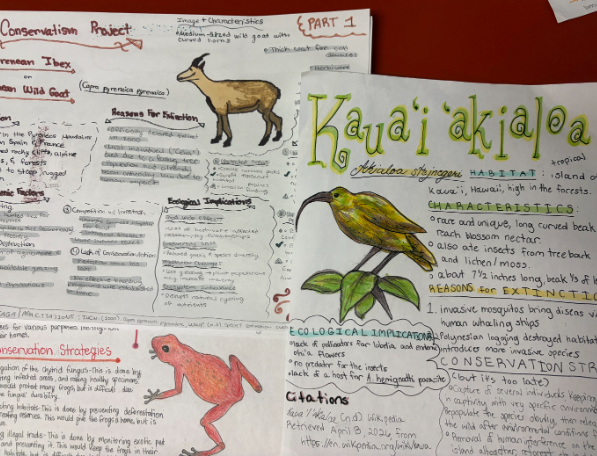
If we aren’t careful, hundreds of extinction exhibit hallways could be added to the museum. But instead of distant dinosaurs, it could be filled with the animals you know and love, the animals that filled your childhood books. African elephants, black rhinos, beluga whales, green sea turtles… the list of endangered species goes on and on.
Everyday, the precious, delicately created balance of ecosystems is destroyed and permanently altered. Even without meaning to, we humans introduce invasive species and diseases that run rampant, upsetting the careful construct of life. This is no meteor, but something worse. Something sentient, aware of our actions but somehow unable to create real change as we recklessly barrel through the Earth, sucking up her resources and abusing her inhabitants. Something here to stay, possibly for thousands of years more, unless we end up creating our own extinction as well.
There is a story that I am sure you probably know well, called Noah’s Ark. Two individuals of every single animal species are rescued upon his great vessel, kept safe while the others are washed away in the wrathful tides. Even then, the importance of preserving each and every species was recognized. In the modern day, we cannot wait around for someone else to build our own sort of “Ark”. So much damage has already been done.
We cannot afford any more rare, unique, beautiful animal species to be lost to the sands of time.
And so, we must act, and never lose hope. Extinction is a very real thing, not simply talk of museums and meteors and floods. It affects us all.